



Đăng ký Tài khoản Online
Quét mã QR, tải App
TPBank Mobile trên
Play Store & App Store

Cài đặt & mở
Tài khoản Online
trong 5 phút
QUÉT MÃ QR TẢI APP TPBANK MOBILE TẠI ĐÂY
Nhận 1001+ lợi ích và ưu đãi với Tài khoản TPBank

MIỄN PHÍ
Chuyển tiền và 60+ loại phí

HOÀN TIỀN 1,2%
Với Thẻ TPBank Visa

CHỌN SỐ TÀI KHOẢN
Theo ý thích, khẳng định cá tính
TPBank Shareholders' Meeting: Bank leaders talk about the impact of tariffs and trade wars
On the morning of April 24, Tien Phong Commercial Joint Stock Bank (TPBank - stock code: TPB) held the 2025 Annual General Meeting of Shareholders to approve many important contents.
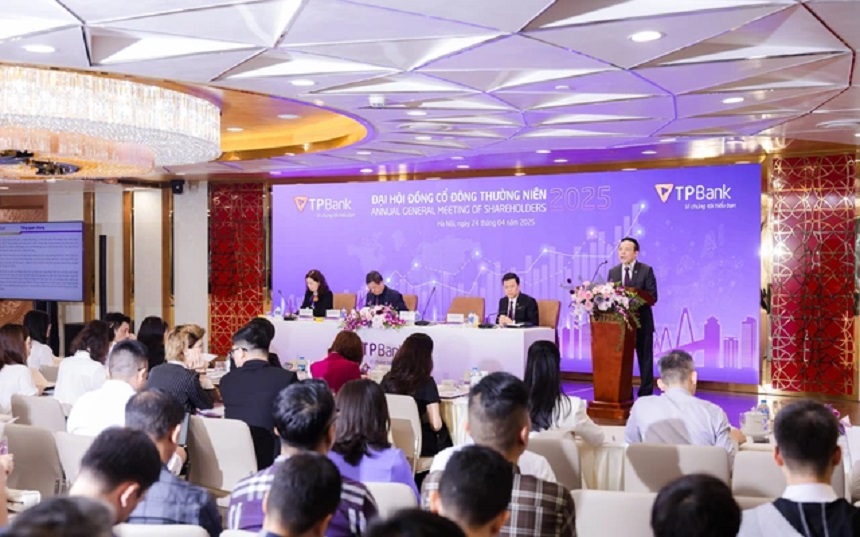
Mr. Do Minh Phu: 14 million customers is a very large number, creating a solid foundation for TPBank
At the meeting, Mr. Do Minh Phu, Chairman of the Board of Directors of TPBank, said that TPBank is still maintaining its leading position in digital banking, in the group of increasingly strong banks. In 2024, TPBank had many positive growth indicators, with profits increasing by 36%.
"In 2012, when we started restructuring, TPBank only had 55,000 customers. Now, the bank has 14 million customers, a very large number, a solid foundation for future development," he said.
The capital adequacy ratio (CAR) has increased sharply, ranking in the top 5 banks in terms of CAR. The operations are increasingly efficient, the service quality is increasingly improved. The cost-to-income ratio (CIR) has decreased from 41% to 35%, a great and continuous effort of all TPBank officers and employees. The bank is also increasingly developing in a transparent and effective direction.
Risk control is focused on and implemented best. The bad debt ratio is controlled at a low level of only 1.12%. Mr. Phu said that TPBank proactively handles potential bad debts, handling about 3,700 billion VND in 2024 alone.
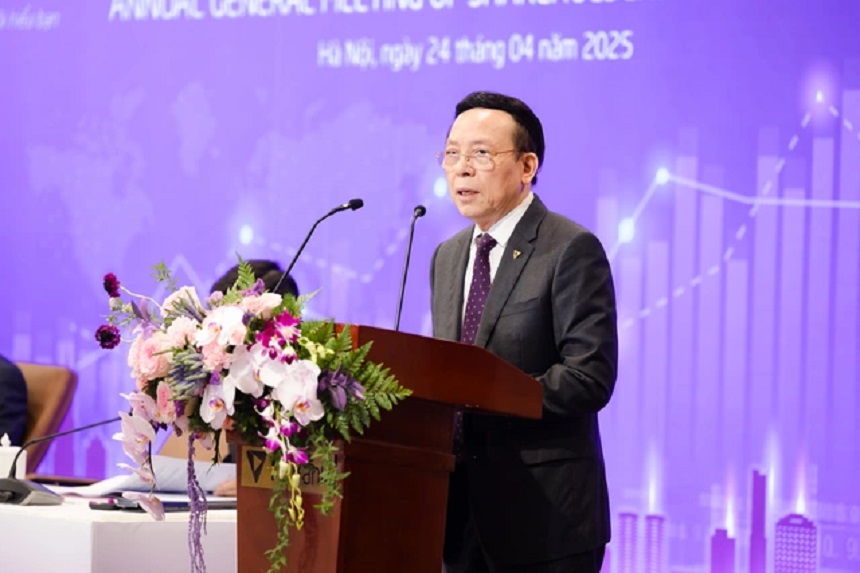
TPBank Chairman of the Board of Directors - Mr. Do Minh Phu
TPBank Chairman emphasized that 2025 will be a challenging year, when the world is witnessing trade confrontation between countries. "Trade wars have many far-reaching consequences. It is no coincidence that gold prices have surpassed their all-time high," he said.
"The question is: how to overcome those challenges? The challenges for Vietnam are great, and the banking industry or TPBank is no exception. We need to clearly identify them early on."
Mr. Phu said that from the beginning of the year, TPBank has set a goal of comprehensive innovation in terms of organization and processes. Even TPBank's very successful foundation field, digital banking, needs to continue to innovate to adapt and rise in a volatile context.
Profit target of VND9,000 billion, up 18.4%
In 2025, TPBank aims for pre-tax profit of VND9,000 billion, up 18.4% compared to 2024. Total assets in 2025 are expected to reach VND450 trillion, up 7.6%. Capital mobilization is expected to increase by 12.3% to VND420 trillion. Outstanding loans and bonds of economic organizations will increase by about 20% to VND313,750 billion. TPBank also said that the official credit growth target will be implemented according to the State Bank's announcement for each period.
Previously, in 2024, TPBank achieved pre-tax profit of VND7,599 billion, completing 101.33% of the plan assigned by the General Meeting of Shareholders.
According to the Board of Directors' report, in 2025, TPBank will change its organizational structure, dissolve the Debt Collection and Processing Block, merge it into the Legal Block and the Credit Monitoring Block, and streamline debt processing. In addition, the bank will reduce the number of intermediate-level personnel, improve productivity, optimize staffing levels, increase sales force, and reduce indirect personnel through the application of technology and process improvement.
The bank also said it will continue to control the entire bank's personnel structure, focusing on prioritizing business units and key projects; review units with low productivity, handle weak personnel; strengthen training to improve professional expertise and discipline; promote the application of technology/digital transformation in training activities; improve labor productivity and the quality of input candidates.
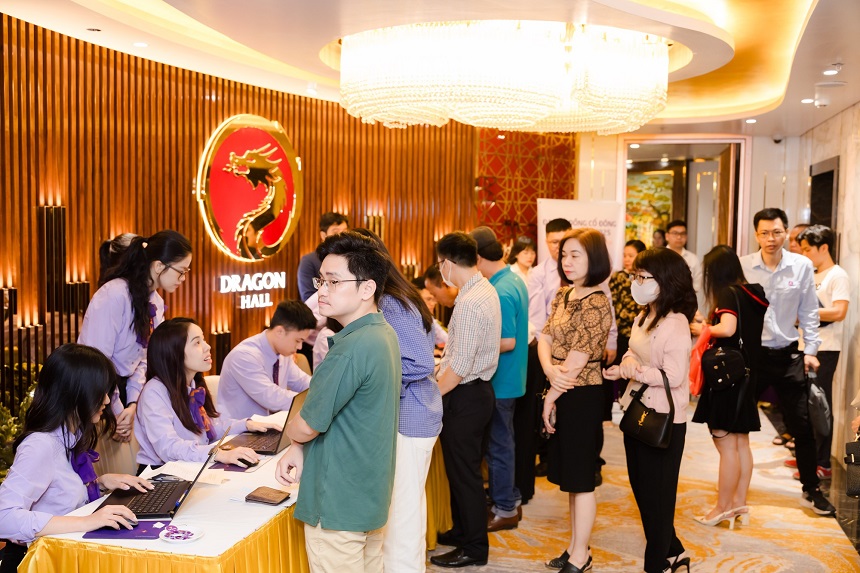
Shareholders complete procedures to attend the meeting
Expected dividend payment rate of 15%
At the meeting, the Board of Directors submitted to the General Meeting of Shareholders a plan to pay cash dividends in 2025 after considering that the Bank's business operations are stable, have a long history of safe and healthy development, and to increase benefits for shareholders who have accompanied the Bank in the past.
TPBank proposes to pay a 10% cash dividend (1 share receives 1,000 VND) from undistributed profits after setting aside funds as of December 31, 2024, according to the Bank's audited consolidated financial statements for 2024. After being approved by the General Meeting of Shareholders, the Board of Directors will decide on a specific implementation time, ensuring compliance with regulations.
In addition to cash, the Board of Directors also proposed to issue a maximum of more than 132 million shares to pay dividends to shareholders at a rate of 5% (shareholders owning 100 shares on the last registration date to exercise their rights will receive 5 new shares). The source of implementation is taken from undistributed profits after setting aside funds as of December 31, 2024, according to the Bank's audited consolidated financial statements for 2024. After the issuance, TPBank's charter capital will increase by a maximum of VND 1,320.9 billion, from VND 26,420 billion to more than VND 27,740 billion.
This will be the third consecutive year that TPBank has paid dividends in both cash and shares. Previously, in 2024, TPBank paid cash dividends to shareholders at a rate of 5%. The total amount that the bank spent was more than VND 1,100 billion. The bank also issued 440.3 million new shares to pay dividends to shareholders, increasing its charter capital from VND22,016 billion to VND26,420 billion.
The Board of Directors proposed to dismiss Mr. Do Anh Tu from the Board of Directors for the 2023-2028 term. Previously, Mr. Tu - Vice Chairman of the Board of Directors submitted a resignation letter on March 18 according to his personal wishes and the Board of Directors approved it on March 20.
Recently, TPBank also announced its business results for the first quarter of 2025 with TPBank's pre-tax profit reaching more than VND2,100 billion, equivalent to 26% of the annual plan, an increase of over 15% over the same period last year. The ROE index (return on equity) continued to remain high at 17.5%.

Discussion Section
- Shareholders: The trade war will directly affect import-export and FDI enterprises and indirectly affect many other enterprises. So what is the current proportion of FDI enterprises and export enterprises at TPBank, and what support measures does TPBank have for these enterprises?
Mr. Nguyen Hung - General Director of TPBank: The export market, especially exports to the US, is facing many difficulties due to factors from the trade war and tariffs. TPBank's total outstanding credit balance for import-export customers related to the export market to the US is about VND 10,800 billion. However, sales from the US market only account for less than 20% of these enterprises, so the impact is not too great.
We have carefully reviewed and considered new credits, especially those related to exports to the US, such as agricultural and aquatic products. The US market is already difficult, even in normal times, exporting to the US is difficult. With the current high tax rate situation, making a profit from exporting to the US is even more difficult.
For FDI enterprises, they mainly use payment services and often do not borrow capital. FDI enterprises investing in Vietnam often borrow capital from their national banks instead of borrowing from domestic banks.
For import-export enterprises, if any, there are only 2-3 enterprises and we will monitor to support in case the enterprises are in difficulty when they want to transform and restructure.
| "TPBank's total outstanding credit balance for import-export customers related to the export market to the US is about VND10,800 billion. However, sales from the US market only account for less than 20% of these businesses, so the impact is not too great," said Mr. Nguyen Hung - General Director. |
Mr. Do Minh Phu - Chairman of the Board of Directors: Currently, businesses that are TPBank's customers are not directly affected by tariffs and trade wars. However, the challenging context will also affect the entire economy and indirectly other customers.
TPBank has a scenario to protect the bank's operational efficiency, in which we reduce unnecessary costs. But unnecessary investments will be stopped. When the economy fluctuates abnormally, people also tend to look for safe havens more. We will consider appropriate interest rates to use capital effectively.
TPBank's highest determination is the goal of ensuring the safety of the banking system, before the profit target. We will balance that. TPBank will closely monitor to have a specific scenario and shareholders can trust. We have a lot of experience in difficult times, having successfully restructured 13 years ago.
We are also willing to share profits to support. If we do not achieve a profit of 9,000 billion this year, we hope shareholders will understand because we are ready to support customers to overcome difficulties.
| "TPBank's highest determination is the goal of banking system safety, before the profit goal", Mr. Do Minh Phu - Chairman of the Board of Directors. |
- Shareholders: What is the driving force behind TPBank's credit growth in the first quarter?
Mr. Nguyen Hung - General Director of TPBank: The bank's first quarter business results are quite positive, although businesses have not been doing well during this period. This year, TPBank has been allocated a credit limit of 15.85% by the State Bank, higher than the industry's target. Not to mention that there may be adjustments, so we are not worried about a lack of credit room in the near future.
The credit growth rate in the first quarter reached 3.6%, compared to the industry average of only 2.5%, showing that our growth rate is much higher. Until recently, credit has increased by 4.5%. Most of the credit is disbursed into production and business sectors, consumer loans such as buying houses, buying cars, etc.
Large projects, especially in the real estate sector, are still unclear about development implementation, so the bank is still cautious in lending. We will continue to follow the right direction, ensuring that credit activities are carried out safely and sustainably.
- Shareholders: Plan to invite foreign strategic shareholders to TPBank to increase capital?
Mr. Do Minh Phu - Chairman of the Board of Directors: TPBank has full foreign room. If TPBank is allowed to increase the maximum foreign ownership ratio, I believe TPBank is an attractive bank for foreign investors.
- Shareholders: During the COVID-19 pandemic up to now, the State Bank of Vietnam (SBV) has lowered operating interest rates to help businesses and individuals have the opportunity to access bank capital. So in the context of falling interest rates, what strategy does TPBank have to maintain NIM (net interest margin)?
Mr. Nguyen Hung - General Director: As shareholders know, the State Bank has always aimed to reduce lending rates for many years. Recently, the Government has also directed not to increase deposit interest rates. Many banks that have increased deposit interest rates have been criticized by the State Bank for going against the policy, because deposit interest rates are the basis for lending interest rates. The State Bank is also keeping operating interest rates low to support growth.
Currently, lending interest rates tend to decrease more and more, not to mention preferential lending programs for some industries and sectors such as agriculture, lending to young people to buy houses, etc.
To maintain or increase NIM, we will try to improve capital costs, increase CASA and have a reasonable capital structure. In fact, banks have to comply with many indicators. We can mobilize short-term capital for cheap costs, but there are constraints on the ratio of short-term capital for medium and long-term loans. The set of indicators that banks comply with is very complicated. Therefore, we will try to balance how to harmonize effectively enough.
Lên đầu trang


 1900 58 58 85

 Visit our branch

 Email
Email